PRESS RELEASE: Mazama unveils world's hottest enhanced geothermal systemTECHNOLOGY: Mazama debuts Thermal Lattice® reservoir technology
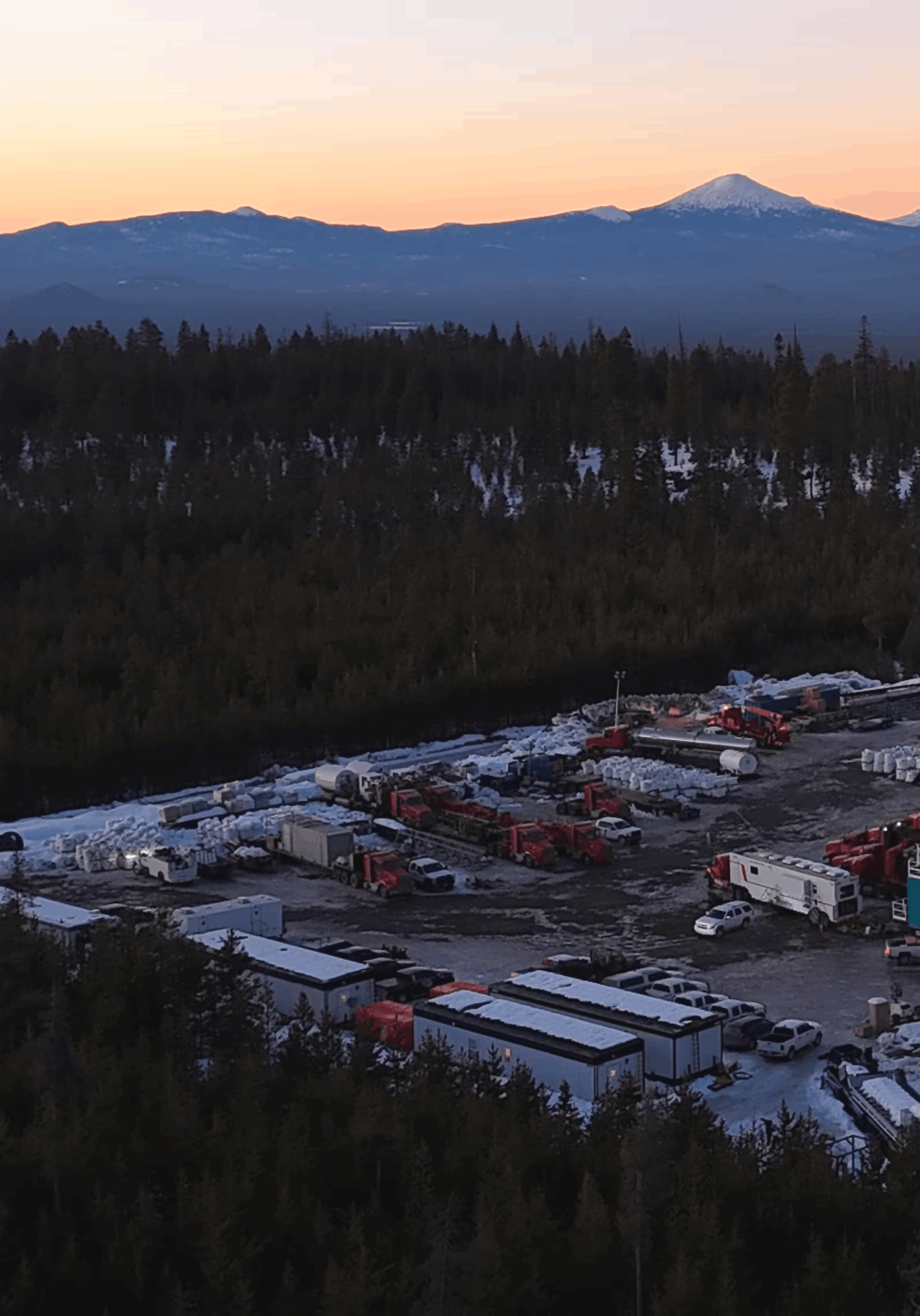
Geothermal mountain landscape at dusk over a drilling site
Mazama Superhot Rock EGS

The Power
Beneath Us

Proven at 629°F with the potential to deliver gigawatt-scale, always-on power, anywhere.

629° F
record-setting heat
Reached in Mazama’s engineered reservoir at Newberry
5-10X
more power per well
The potential of superhot rock compared with conventional engineered geothermal systems
Up to
80%
fewer wells
Higher energy density means dramatically less drilling infrastructure for the same power output
Up to
75%
less water
Substantially smaller water requirements than conventional engineered geothermal systems
See the Path

The record we set is the floor. From here, it gets hotter.

Temperature changes the economics of geothermal. The hotter the rock, the more energy each well can deliver, and the fewer wells it takes to produce the same power.

At roughly 705°F, water crosses its critical point. It becomes supercritical: neither conventional liquid nor steam, but a more energy-dense fluid capable of carrying far more heat to the surface. That threshold opens the door to a step change in geothermal efficiency and power density. It’s the frontier Mazama is advancing toward. Our pilot demonstration brought it within reach.
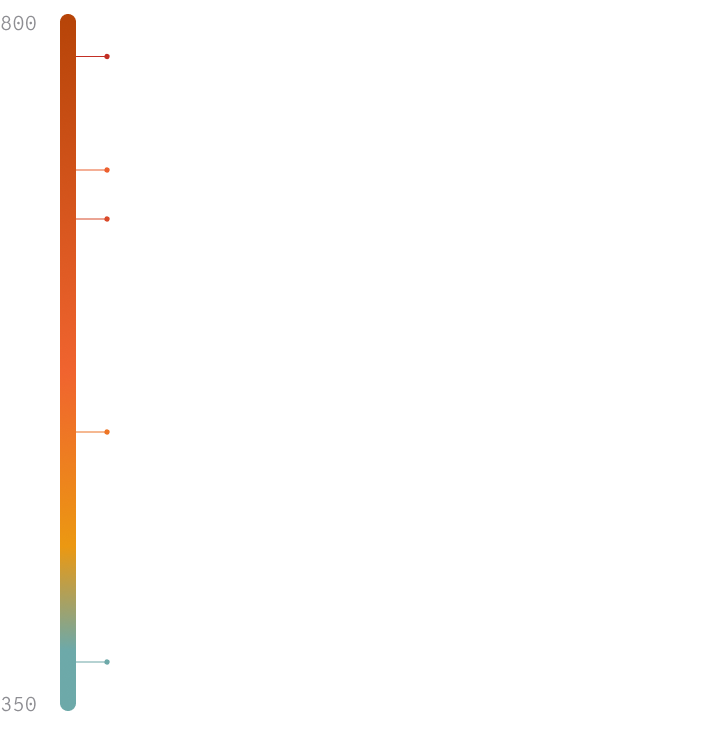
Temperature scale showing geothermal temperatures from current EGS to Athena
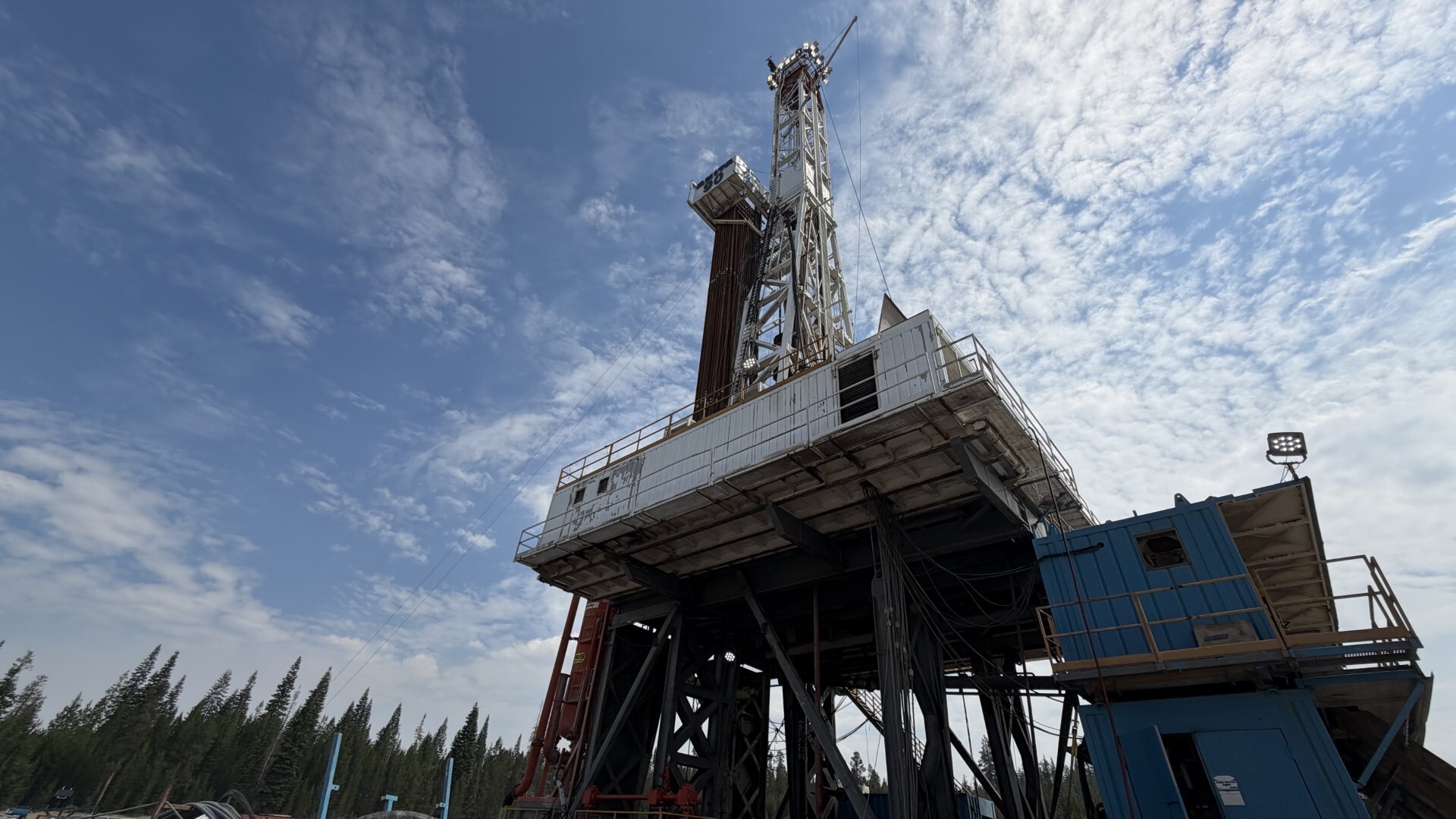
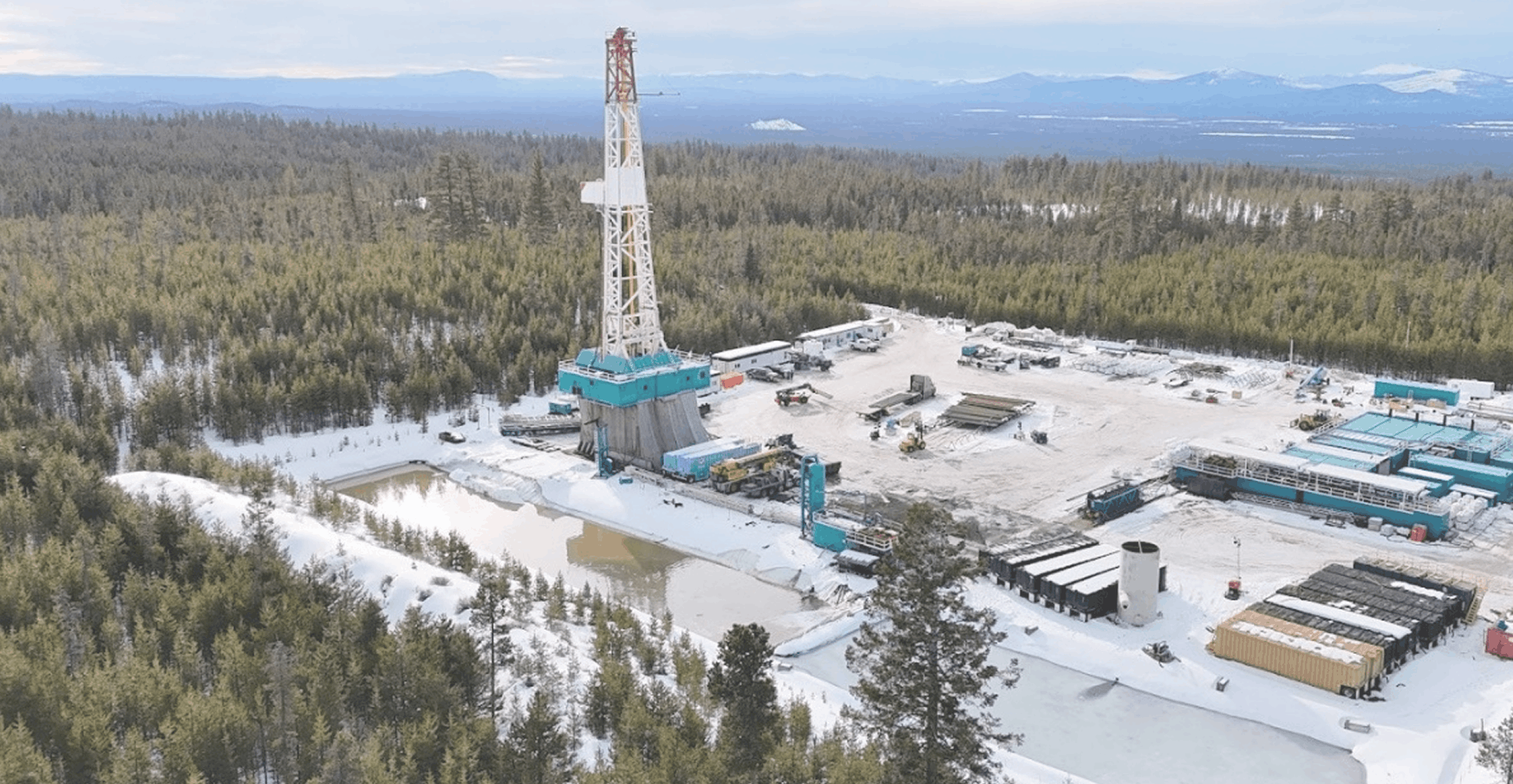
Newberry pilot drilling rig in a forested landscape
Stage
01
Code Name:
Newberry Pilot
Year:
2025
Status:
Completed
We drilled nearly two miles into hot dry rock at 629°F, built a reservoir where there wasn’t one, and it held. The world’s hottest engineered geothermal system.
What we're doing ›
Why it matters ›
What we're doing ›

We drilled 10,200 ft into hard rock at Newberry in Central Oregon and built a reservoir where there wasn't one. The rock at the bottom of that well is 629°F (331°C), hotter than any engineered geothermal system (EGS) pilot before it. Then we circulated water through it and measured what came back.

Why it matters ›

Two hard things had never been done together: reaching rock this hot, and keeping an engineered reservoir open once you get there. Heat becomes power when the water you send down comes back up. At Newberry, it did.

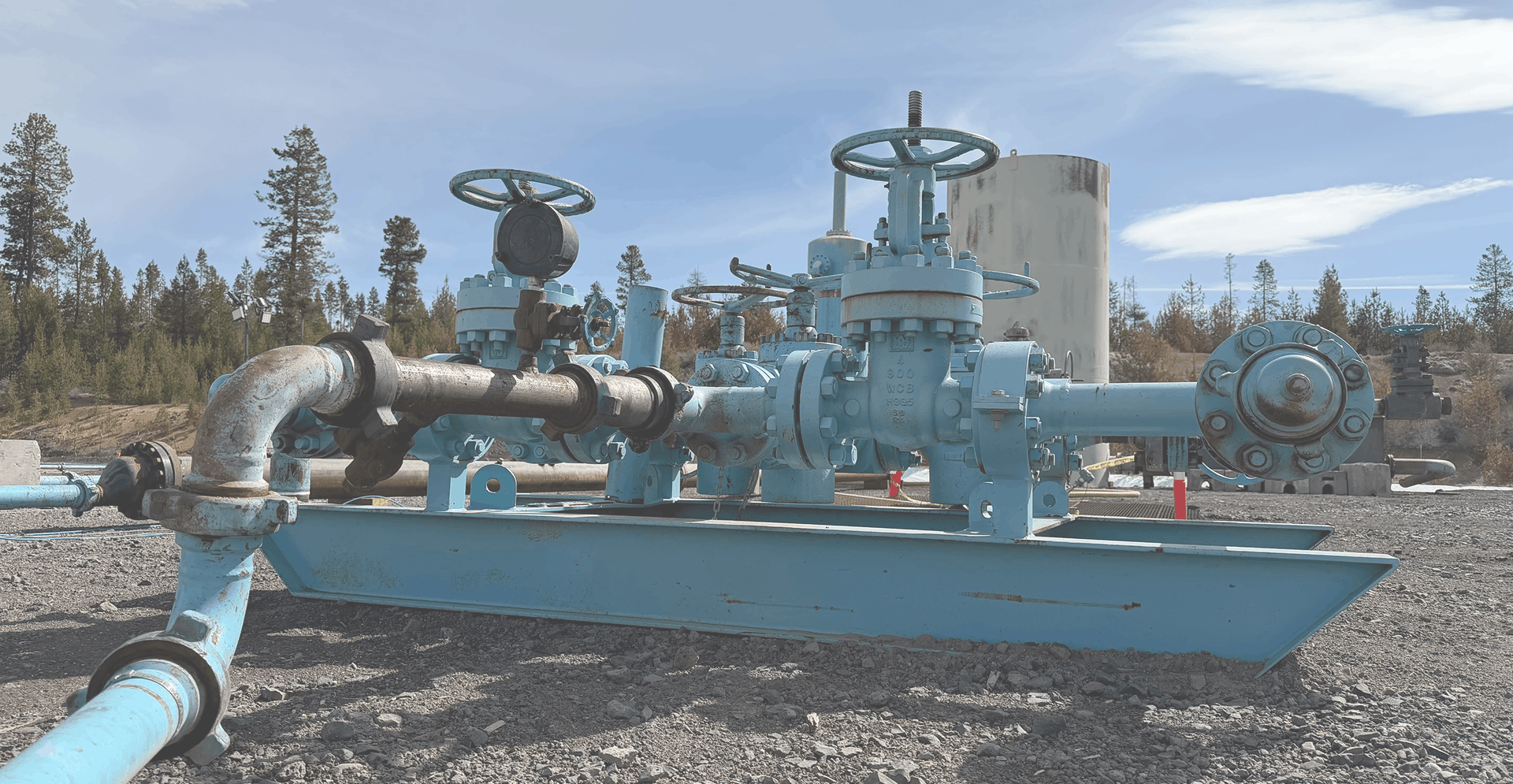
Athena wellhead equipment at the geothermal site
Stage
02
Code Name:
Athena
Year:
2026
Status:
Underway
One well, headed nearly three miles down, into rock hotter than any engineered system has touched.
What we're doing ›
Why it matters ›
What we're doing ›

One vertical well, designed to reach nearly three miles, targeting rock above 752°F. The plan: take core samples, test supercritical CO₂ as a drilling fluid, and build a precise picture of the rock: its heat, its strength, its structure. From there, deeper, as deep and as hot as the tools allow.

Why it matters ›

Athena is the well that crosses the threshold. Past 705°F, water becomes supercritical, and the energy it can carry increases. That's the difference between a conventional engineered geothermal system and one that delivers five to ten times the power. Athena is how we find out what that is worth, and how much bigger the resource becomes, at Newberry and beyond.

Athena wellhead equipment at the geothermal site
Stage
03
Code Name:
Ceres
Year:
2026-2027
Status:
Underway
Two horizontal wells in rock up to 710°F: the world's first superhot rock EGS, targeting 15 megawatts of initial power generation.
What we're doing ›
Why it matters ›
What we're doing ›

Two horizontal wells, each running more than half a mile sideways through rock reaching 710°F, connected underground by an engineered reservoir. Designed to circulate water at commercial rates and generate 15 megawatts in initial testing. Supported by the U.S. Department of Energy.

Why it matters ›

Ceres proves the business, not just the science. A well pair generating 15 megawatts is the module every larger project is assembled from: build enough of them and you have a power plant. The first Mazama system a utility could put under contract.

Athena wellhead equipment at the geothermal site
Stage
04
Code Name:
To be announced
Year:
2026-2030
Status:
Planning Underway
200 megawatts at Newberry. Built to be repeated.
What we're doing ›
Why it matters ›
What we're doing ›

A commercial power plant at Newberry, built from Ceres-class well pairs, and the first triplets: one well sending water down, two bringing the heat back up. Drilling and plant construction across 2027 and 2028, first power targeted for 2029, full output in 2030.

Why it matters ›

This is where a project becomes a power company. It would be the first superhot rock geothermal power plant in America operating at commercial scale, at a site that can host at least 5 gigawatts, roughly a quarter of average Pacific Northwest electricity demand. Because the plant is built from repeatable modules, not a one-off design, the same approach works wherever the rock is hot enough.

Athena wellhead equipment at the geothermal site
Stage
05
Code Name:
TBD
Year:
2030+
Status:
Development
The land for what comes next is already secured. Newberry is the first site, not the only one.
Why it matters ›
What we're doing ›

We've secured land in other parts of the western United States, sites chosen for what sits beneath them: rock hot enough for the well pairs and triplets proven at Newberry. It won't be the last place we build.

Why it matters ›

We came to Newberry because superhot rock is easiest to reach here, not because it only exists here. The same heat can be reached almost everywhere: the Clean Air Task Force estimates that tapping just 1% of the U.S. resource could generate more than 4 terawatts of clean, firm power. Once the engineering is settled, the limit stops being geology and starts being how fast we can drill.

Conventional EGS runs cool.

Conventional engineered geothermal systems (EGS) solved the location problem, building the reservoir instead of finding it. The limit that remains is heat. Today's systems run near 400°F, and at that temperature each well delivers modest power, so scale has to come from drilling more of them. Older hydrothermal plants are narrower still, needing hot water already moving close to the surface, an accident of geology found in a handful of places.

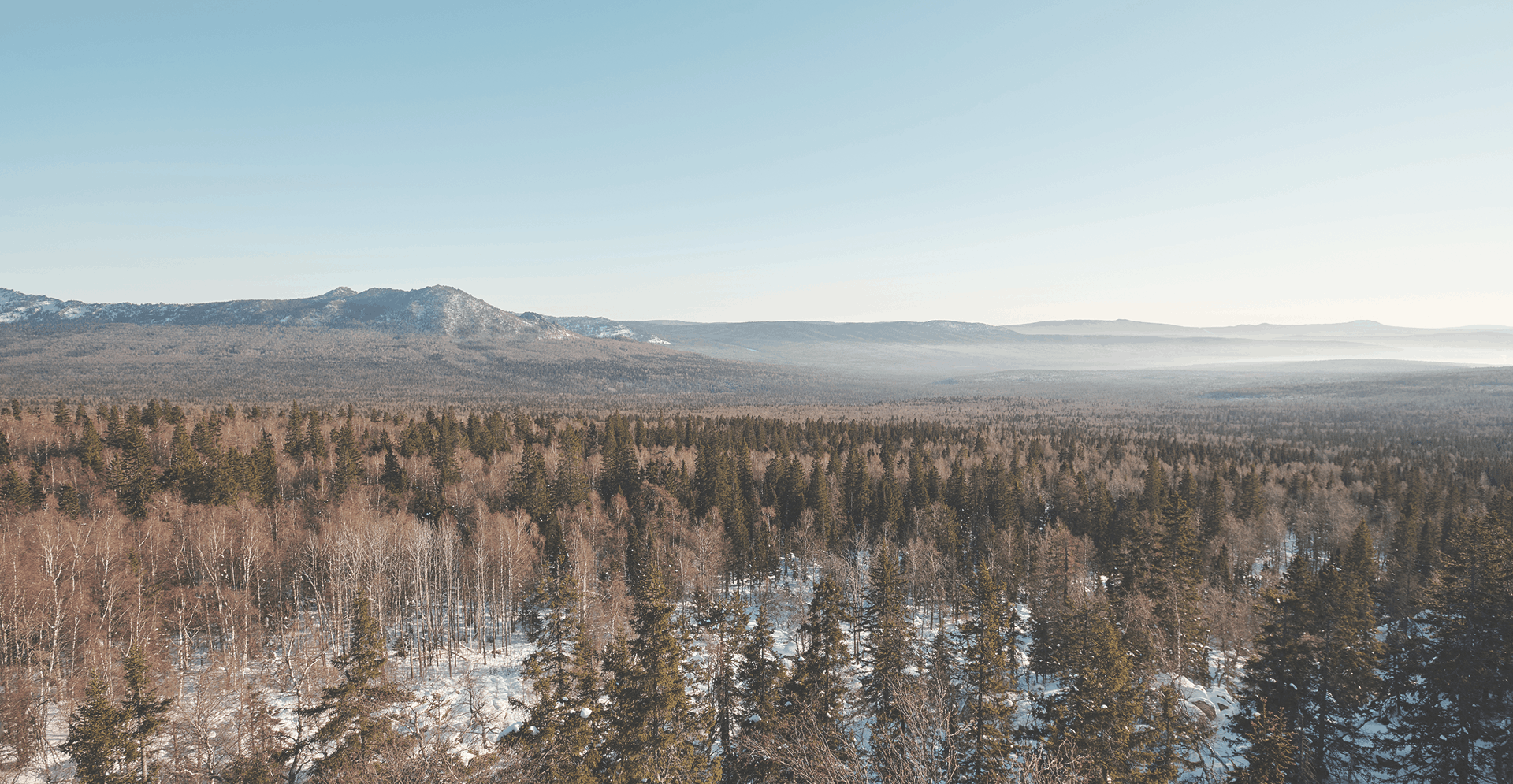
Hot Rock is everywhere.

Hot dry rock between 572°F and 705°F, sitting under the whole planet, and out of reach until a reservoir could be engineered and held at those temperatures. Our pilot proved it at 629°F.

Past 705°F, the physics changes.

Above the critical point of water, the fluid circulating through the rock becomes supercritical and carries far more energy per unit of flow. That's the physics behind up to ten times the power per well, and it turns geothermal from a local accident into a national resource.

302–572°F
Typical resource temperature
under 2 miles
572–705°F
The Hot Rock band
dry basement rock, roughly 3 miles down
705°F +
Above the critical point of water
the threshold Athena is designed to cross
4MW
Power per well at 400°F
current EGS average, 60 kg/s
23MW
Power per well at 700°F
modelled at 60 kg/s
10×
40MW
Power per well at 850°F
modelled at 60 kg/s
0.4%
Of U.S. utility-scale electricity
from Geothermal - EIA
~3miles
Typical depth to resource
present under most of the planet
63+TW
Global resource in this range
Clean Air Task Force
Resource temperature Drag the dial, or pick a band
302 °F 482 °F 572 °F 705 °F 932 °F
NEWBERRY — 629 °F MEASURED
629 °F
CONVENTIONAL EGS — BELOW 572 °F HOT ROCK EGS — 572 TO 705 °F SUPERCRITICAL WATER — ABOVE 705 °F
Conventional EGS Hot Rock EGS SuperHot Rock EGS

One scale, three regimes. Conventional plants work below 572°F, where the heat has to find its own way toward the surface. The Hot Rock band above it is present almost everywhere but has to be engineered. Past 705°F water turns supercritical and carries far more energy per unit of flow — which is why the power per well moves from 4 MW to 40.

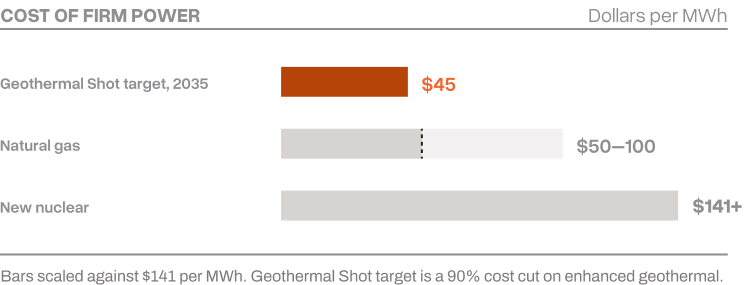
Modelled cost of energy
$59/MWh
$0.059 per kWh
Inside the natural-gas band
DOE target$45 Natural gas$50–100 New nuclear$141+
GEOPHIRES v3.9.64 · 500 MW, 30-year project · IRS Section 48E ITC · modelled at 200 / 350 / 400 / 450 °C

One scale, three regimes. Conventional plants work below 572°F, where the heat has to find its own way toward the surface. The Hot Rock band above it is present almost everywhere but has to be engineered. Past 705°F water turns supercritical and carries far more energy per unit of flow — which is why the power per well moves from 4 MW to 40.

Why it Matters

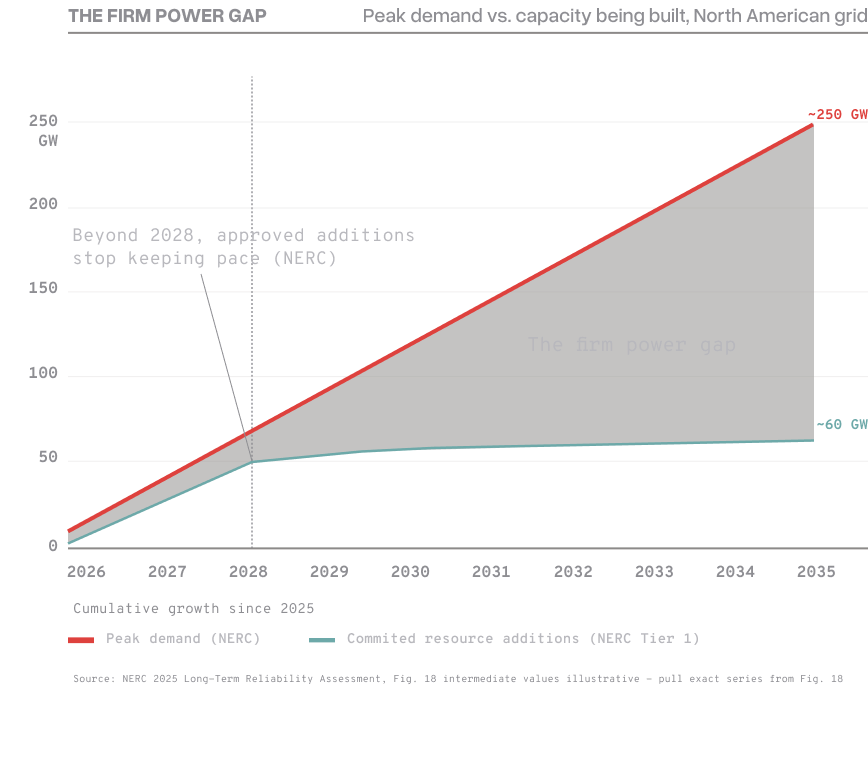
The grid cannot add firm power fast enough.

Electrified homes and vehicles, returning industry, and data centers are adding load faster than anyone can build generation that runs every hour of the year.

Superhot rock geothermal is firm power without the fuel: always on, a small footprint, and built wherever the rock is hot enough rather than found where geology allows. At scale, it is projected to compete with the cheapest firm power on the grid. And the United States, with a drilling workforce and supply chain built over a century of oil and gas exploration and development, is better placed to build it than anyone.
Temperature scale showing geothermal temperatures from current EGS to Athena

0.4 %

of U.S. utility-scale electricity comes from geothermal, almost all of it from a handful of western states where hot water reaches the surface on its own.
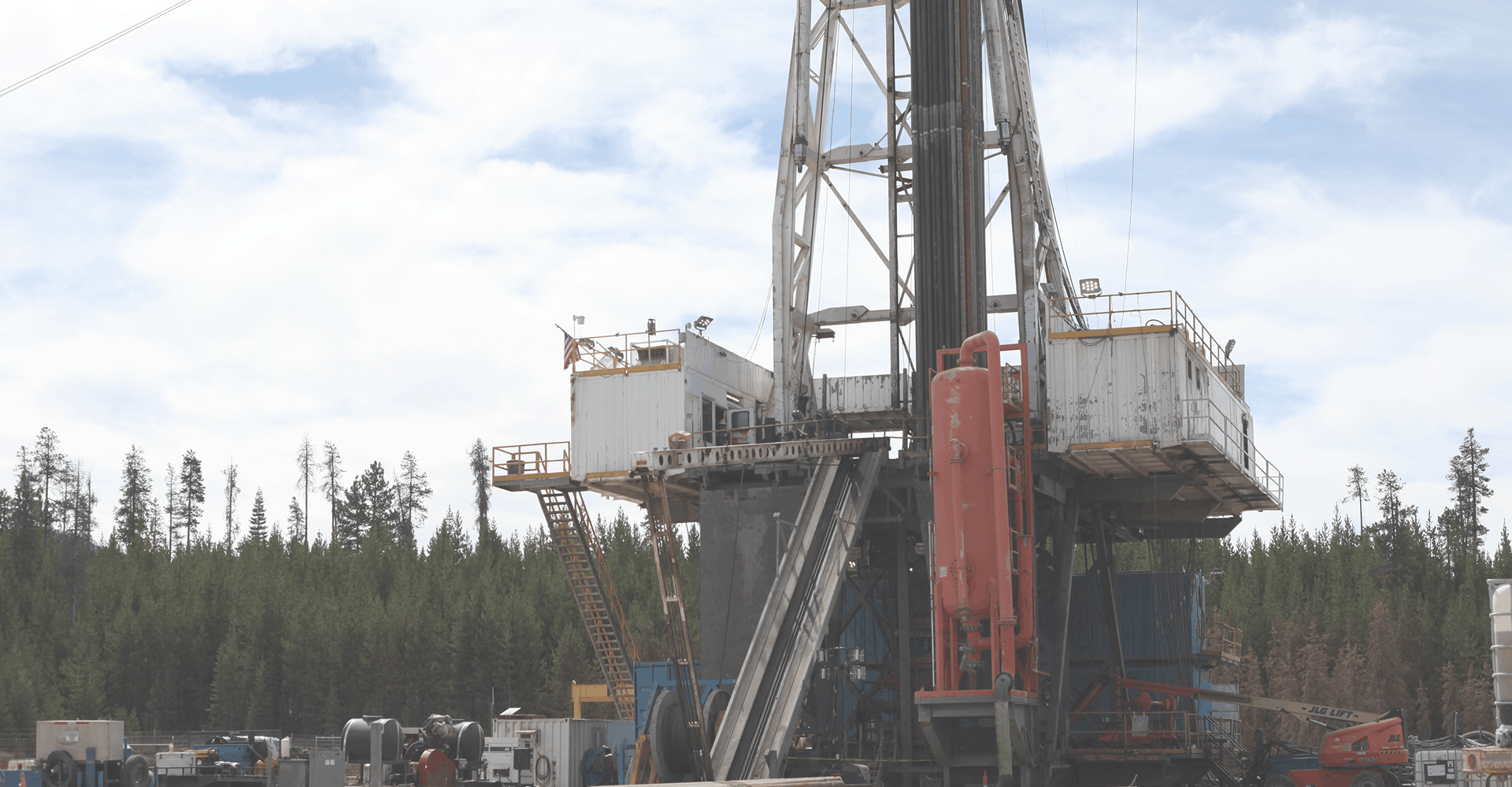
Geothermal drilling site with rig and equipment
Where It Works

Newberry is a proving ground, not a prerequisite.

The heat isn't unique to this site, it's everywhere beneath us. We drilled at Newberry because superhot rock is closer to the surface than most places, and because 50 years of geothermal exploration have made it some of the best-mapped ground in the country.

Conventional geothermal needs a rare accident of geology. Engineered geothermal drills deeper, into rock that is hot at depth almost everywhere, and builds the reservoir instead of hunting for one. What Newberry proves is repeatable wherever the rock is hot enough.

Resource
63+ TW globally

Projects in the same temperature range as Newberry, on six continents - Clean Air Task Force

Next Ground
The Western U.S.

Land already acquired outside Oregon. Newberry will not be the only place we build.

Today
0.4% of U.S. power

The gap between what geothermal supplies and what the rock holds is the opportunity.

MUSE™ — Modular Unconventional Superhot Energy

One system, not one bet.

MUSE is not one breakthrough technology that has to work. It is three systems engineered to run as one, and they already have, in the field. Protected by 24 granted patents, with more pending.
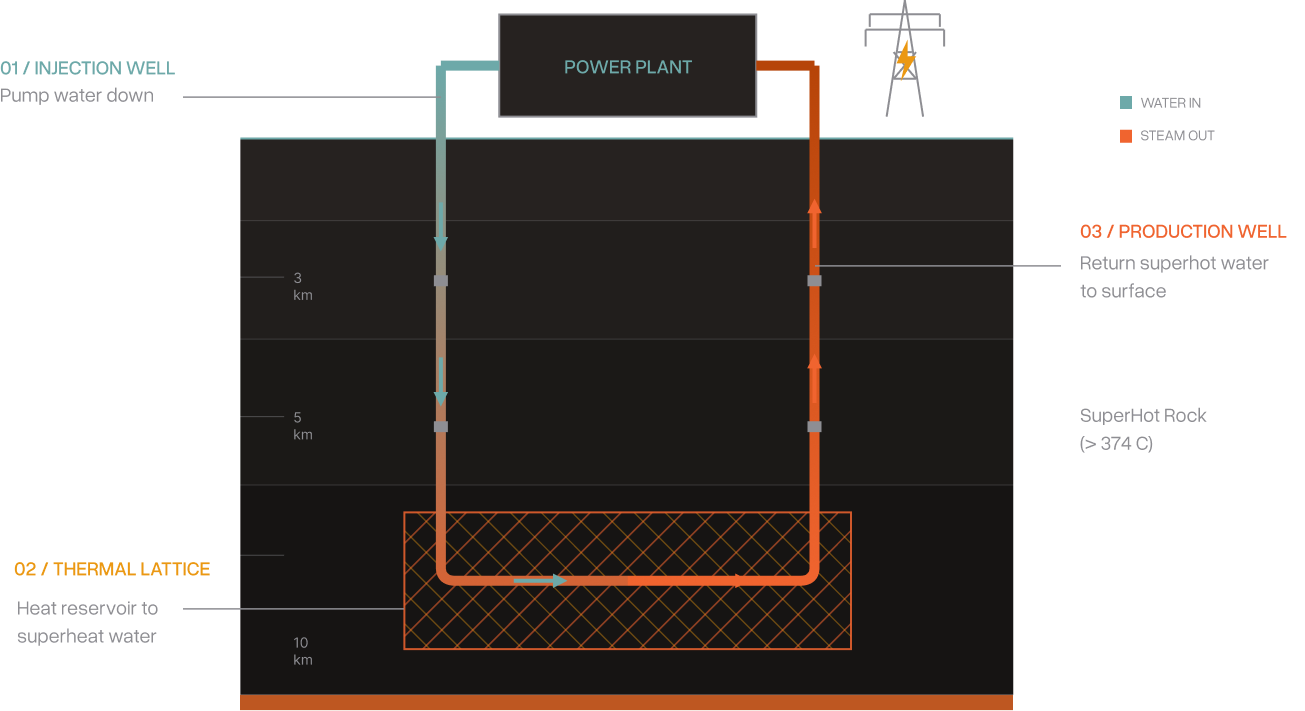
Diagram of Mazama geothermal system: injection well, thermal lattice, power plant, and production well
01 — Drilling
Mazama Drill

Horizontal wells for maximum contact with the rock, and well construction that holds its integrity at temperatures that destroy conventional equipment.

02 — Reservoir
Thermal Lattice®

An engineered reservoir that opens a durable pathway network for heat: water moving through a large volume of hot rock, with the pathways staying open.

03 — Harvesting
HeatHarvester®

Forecasting how the reservoir and wells perform over years, so output can be contracted rather than hoped for.
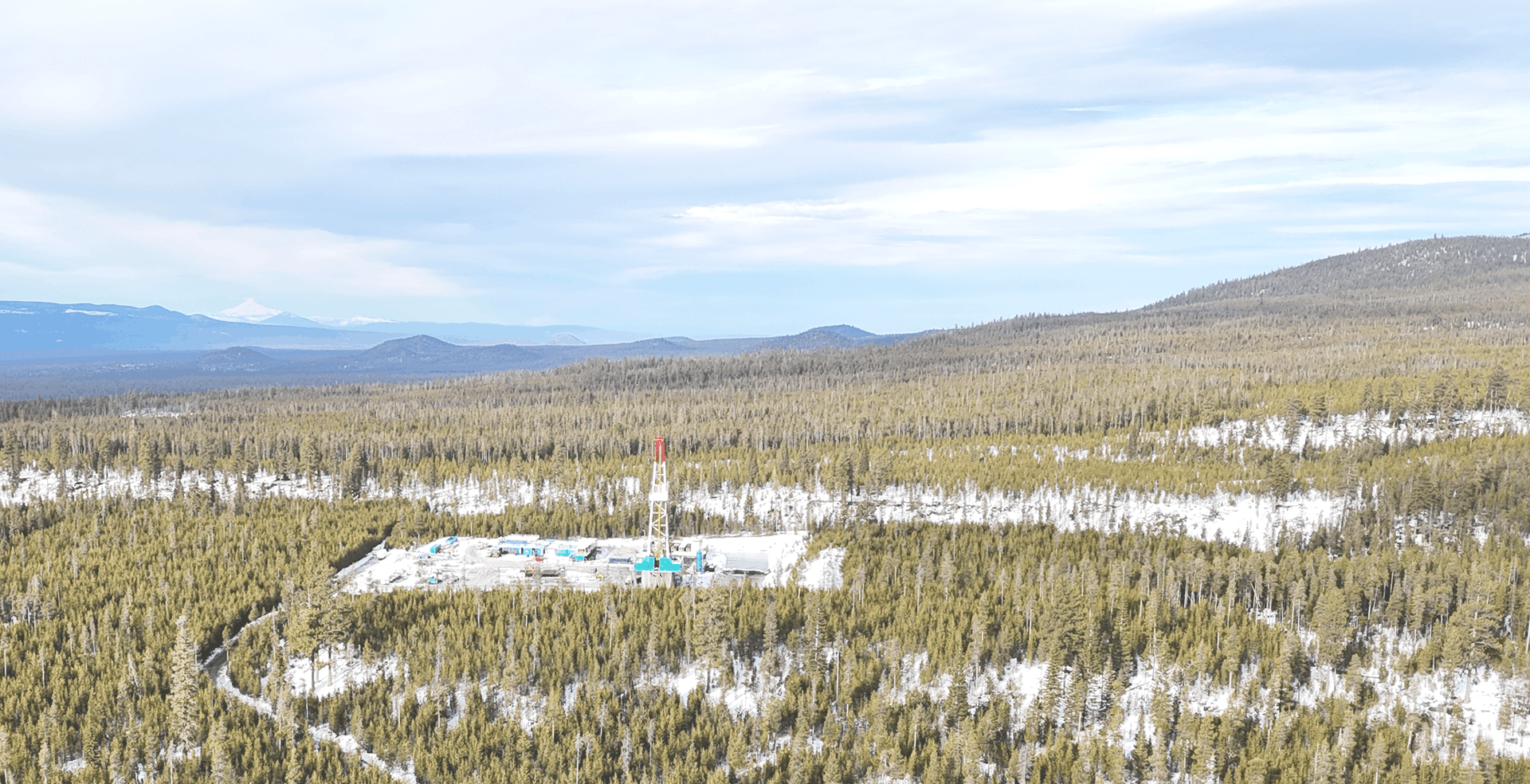
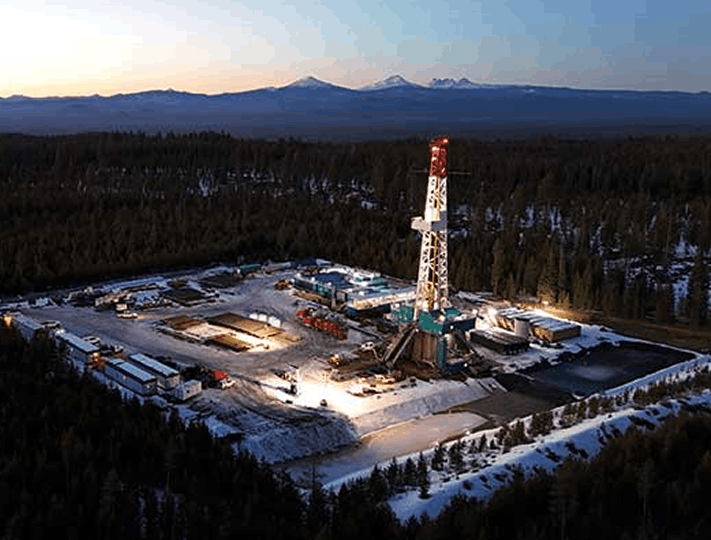
Aerial view of a geothermal well pad in a forested landscape
Capacity Density

More power.
Far less ground.

A superhot rock plant sits on a small surface footprint while drawing power from a vast volume of rock below. The energy is measured in square miles underground and acres above.

LAND USE
Current EGS · 392°F
472
Total WELLS

350 acres of well pad

LAND USE
Mazama superhot rock EGS · 752°F
90
Total WELLS

100 acres of well pad

80%
Fewer wells
75%
Less water
70%
Less land
Geothermal drilling site at Newberry, Oregon
News

What people are saying about Mazama Energy.

Read More →

“Mazama’s Projects Athena and Ceres are pivotal milestones in the progression of next-generation geothermal. Continued field demonstration and innovation can help expand the range of geothermal resources and locations capable of delivering reliable, 24/7 energy at scale.”

Sean Porse
Acting Director, Geothermal Technologies Office, U.S. DOE

US Department of Energy

“Mazama’s team successfully deployed a spectrum of innovative technologies – including directional drilling, high-temperature well construction, and proprietary stimulation – to deliver performance under conditions far beyond traditional oil and gas industry limits.”


Vinod Khosla
Founder, Khosla Ventures

Khosla Ventures

“To do consequential geothermal that matters at the scale of tens or hundreds of gigawatts for the country, and many times that globally, you really need to solve for high temperatures.”


Washington Post

Washington Post

Our Partners

Energy innovation collaborators

Partner logoPartner logoPartner logoPartner logoPartner logoPartner logoPartner logoPartner logoPartner logoPartner logoPartner logoPartner logoPartner logoPartner logoPartner logo
What this means for you

We are ready. Are you?

Decorative dot pattern
Utilities & Grid Planners
A power plant with the characteristics you already want — and a path to match the price of natural gas.
DOE & policymakers
American oil-and-gas drilling expertise applied to a domestic source of firm energy. Practical, not grandiose.
Hyperscalers & AI
Firm, carbon-free power at very high energy density, without a massive surface footprint. Ready today.
Communities & Tribal Partners
A smaller footprint, fewer wells and judicious use of water — with the jobs built locally.
Investors
Demonstrated technical progress, a patent position, and a line of sight to contracted, economic generation.
The Payoff

Past 705°F, the physics changes.

Above the critical point of water, fluid circulated through the rock becomes supercritical — carrying several times the energy per unit of flow, and turning a good resource into a category-defining one.

705°F
Above the critical point of water
the threshold Athena is designed to cross
10X
40
mw
Power per well
Modelled at 40 kg/s
3+
tw
Global resource in this range
Clean Air Task Force
302°F
482°F
572°F
705°F
932°F
763°F
Superhot Rock
Supercritical water — above 705°F
Modelled cost of energy
$52
/
MWh
$0.052 per kWh
Inside the natural-gas band
DOE Target
$45
Natural Gas
$50–100
New Nuclear
$141+

One scale, three regimes. Conventional plants work below 572°F, where the heat has to find its own way toward the surface. The Hot Rock band above it is present almost everywhere but has to be engineered. Past 705°F water turns supercritical and carries far more energy per unit of flow — which is why the power per well moves from 4 MW to 40.

Buying power

Utilities, grid planners and hyperscalers. Let’s talk about what you need and when you need it.

info@mazamaenergy.com

Building it

Engineers, crews, vendors and contractors. We are hiring in Central Oregon and beyond.

See open roles

Popup Title

This is a short description inside the popup dialog. Replace this text with your own content.